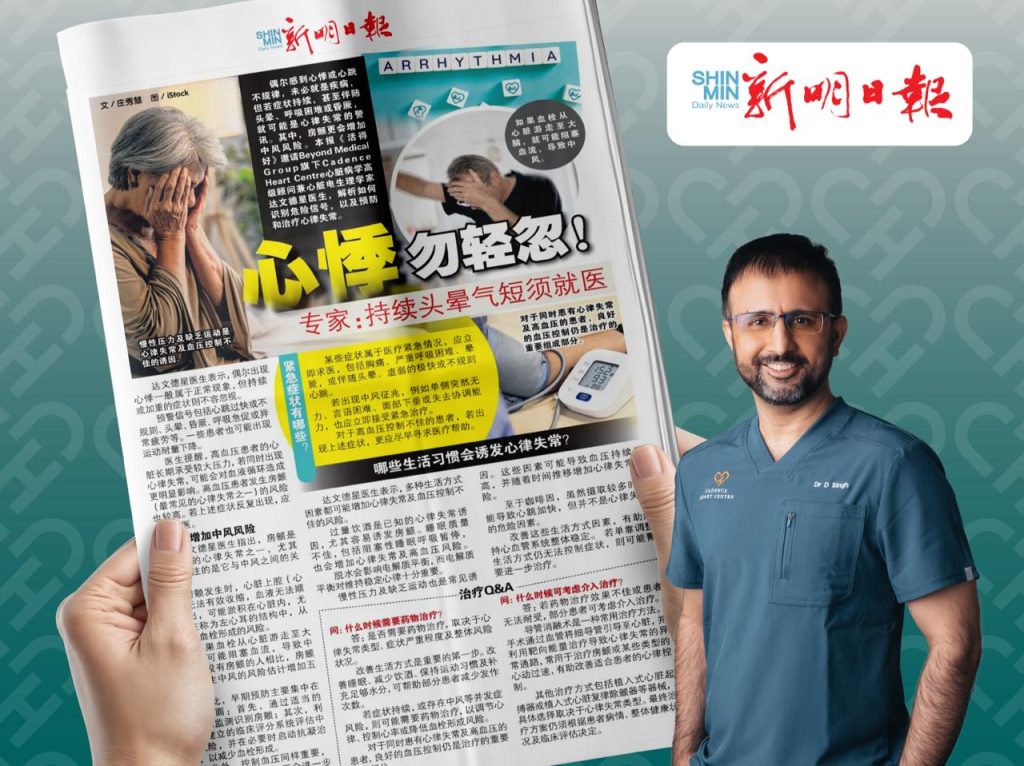
Adapted from an article originally published in Shin Min Daily News (新明日报), July 7, 2026, featuring insights from Dr Devinder Singh, Senior Consultant Cardiologist and Cardiac Electrophysiologist at Cadence Heart Centre, Beyond Medical Group.
Occasionally feeling your heart skip a beat or race isn't necessarily a sign of illness. But if the symptoms persist or are accompanied by dizziness, breathlessness, or fainting, they could be a warning sign of arrhythmia. Left unchecked, certain types of arrhythmia can even raise your risk of stroke.
According to Dr Devinder Singh, occasional palpitations are generally normal. However, symptoms that are persistent or worsening should not be ignored.
Warning signs to watch for include:
Dr Devinder also notes that patients with high blood pressure are under greater cardiac strain, which combined with arrhythmia, can significantly affect blood circulation. High blood pressure patients also have a higher risk of developing atrial fibrillation (AFib), one of the most common types of arrhythmia. If these symptoms recur, medical attention should be sought promptly.
Dr Devinder explains that AFib is one of the most common forms of arrhythmia, and one that deserves particular attention because of its link to stroke.
During AFib, the upper chambers of the heart (the atria) fail to contract effectively, causing blood to pool and potentially clot, particularly in a heart structure called the left atrial appendage.
If a blood clot travels from the heart to the brain, it can block blood flow and cause a stroke. Compared to people without AFib, those with the condition face roughly a fivefold increase in stroke risk.
Early prevention therefore focuses on two key areas:
Controlling blood pressure is equally important, since poorly managed hypertension further increases stroke risk.
Dr Devinder points to several everyday habits that can increase the risk of arrhythmia and make blood pressure harder to control:
As for caffeine — while excessive intake may cause a faster heartbeat, it is generally not considered a risk factor for arrhythmia itself.
Improving these lifestyle factors can help keep the cardiovascular system stable. However, if symptoms persist despite lifestyle adjustments alone, further treatment may be needed.
Certain symptoms require immediate medical attention. Seek emergency care right away if you experience:
Signs of a possible stroke — such as sudden weakness on one side of the body, slurred speech, facial drooping, or loss of coordination also require emergency treatment.
For patients with poorly controlled high blood pressure, the above symptoms should prompt an even earlier visit to a doctor. And for those managing both arrhythmia and high blood pressure, good blood pressure control remains a key part of overall treatment.
Whether medication is necessary depends on the type of arrhythmia, symptom severity, and overall risk profile.
Lifestyle changes are an important first step — improving sleep, reducing alcohol intake, maintaining regular exercise, and staying adequately hydrated can help some patients reduce the frequency of episodes.
If symptoms persist, or if there is a risk of stroke or other complications, medication may be needed to regulate heart rhythm, control heart rate, or reduce the risk of clot formation.
If medication is ineffective or not well tolerated, some patients may consider interventional treatment.
Catheter ablation is a commonly used procedure. It involves guiding a thin catheter through a blood vessel to the heart and using targeted energy to treat the abnormal electrical pathways causing the arrhythmia. It's often used to treat AFib or certain types of rapid heartbeat, and can help improve rhythm control for suitable patients.
Other treatment options include implantable pacemakers or implantable cardioverter-defibrillators (ICDs). The final choice of treatment depends on the type of arrhythmia, along with the patient's condition, overall health status, and clinical evaluation.
Disclaimer: This article is for general informational purposes only and is not a substitute for professional medical advice. Please consult your doctor or healthcare provider for guidance specific to your health.

Member of Beyond Medical Group
Copyright © Cadence Heart Centre | Terms & Conditions